
Grinding/vibrating noise in certain conditions
Hi, my Core One is a couple of months old and makes an annoying noise, as if a screw were loose, when the head is in a certain positions, moving in some direction at a particular speed.
I assume there’s some sort of resonance in these cases.
The prints are basically fine, but then I haven’t been looking for flaws. I suppose there are some VFAs…
I tried 3D printing over ten years ago (a Prusa i3 clone) and obsessed over test prints etc to the extent that I was never satisfied and never got around to doing anything useful. So this time I bought the pre-assembled version and haven’t done any calibration/overhang/temperature tests at all, nor belt tensioning, and am just happily printing things and amazed at the quality.
Still, the noise is irritating. Is this the sort of thing an accelerometer/input shaping is supposed to help with?
The firmware is still on 6.3.4.

RE: Grinding/vibrating noise in certain conditions
I wouldn't assume anything until you've properly done belt tensioning with the resonance tool in the firmware.

RE: Grinding/vibrating noise in certain conditions
First, you should upgrade to 6.4.0. Then you should use the manual belt tuning wizard to correctly tune your belts. Next the noise you are hearing is resonances with the frame. You can quiet it down a lot by purchasing the accelerometer and running phase stepping calibration.
RE: Grinding/vibrating noise in certain conditions
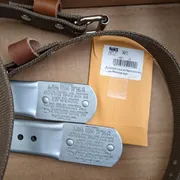
Supposedly the preassembled core one units are individually calibrated for phase stepping at the factory (see below for more details). So yes, I agree with the above advice since it seems like you didn't modify your printer and therefore wouldn't benefit from personalized input shaping calibration. Upgrade your firmware and tune your belts with the new built-in wizard. If that doesn't solve it, you might benefit from the work detailed here.
Back to phase stepping... I asked support what it means for my core one kit to have phase stepping. Afterall, the production description says "Phase Stepping: Yes." I knew you needed the accelerometer to perform this calibration, so I was probing them for information. They said "The calibration is not done on your COREOne, because your printer came as a kit." So I assume this means they are individually calibrating the preassembled units for the phase stepping ability.

RE: Grinding/vibrating noise in certain conditions
I've had mine since April 2025. It was great at first, but after about 6 months, it started making strange "rumbling" noises during certain movements.Of course, I adjusted all the belt settings, etc.I recently re-lubricated the side rollers, and that helped a bit.As for calibration, I assume they do it to maintain the "out-of-the-box" quality.
Since I'll be changing the belt and timing pulley to 1.5 GT, I think it's essential to test the calibration again.
RE:
Thanks everyone!
I updated the firmware and tightened the belts using the wizard. Frequency went from 85/85 to 95/94 and the vibration noise is much reduced.
I expect it could be better because I think I may not using the strobe feedback properly. It says "Look for slow belt movement with sharp, regular peaks". I was going for slow(ish) belt movement with good, strong peaks ie. maximum displacement...
I wonder what the strobe frequency is. If it were exactly the same as the excitation frequency then the belt would appear stationary at some arbitrary displacement.
Is there some way to adjust the bottom and top tensions independently?
Anyway, I'll be getting the accelerometer when it's back in stock and then do the input shaping and phase stepping.
RE:
Thanks everyone!
I updated the firmware and tightened the belts using the wizard. Frequency went from 85/85 to 95/94 and the vibration noise is much reduced.
I expect it could be better because I think I may not using the strobe feedback properly. It says "Look for slow belt movement with sharp, regular peaks". I was going for slow(ish) belt movement with good, strong peaks ie. maximum displacement...
I wonder what the strobe frequency is. If it were exactly the same as the excitation frequency then the belt would appear stationary at some arbitrary displacement.
Is there some way to adjust the bottom and top tensions independently?
Anyway, I'll be getting the accelerometer when it's back in stock and then do the input shaping and phase stepping.
The strobe frequency is intentionally offset from the belt frequency so it beats rather than appears stationary. Also, do not adjust the left and right tension screws independently, doing so will bend the gantry and cause other problems. As long as the both belts are in the 90's and the top belt is higher than the bottom then you are OK. If the bottom belt is higher, then need to loosen both completely and redo the tension ensuring both screws are turned by the same amount.
RE: Grinding/vibrating noise in certain conditions
Yes, I've measured about 3 Hz difference between strobe and excitation frequency. It wouldn't be usable without that as the belt would appear stationary and you couldn't see the maximum deviation. That's what's important. You're looking for the maximum peak to peak motion and it's easy to get distracted by the variations in frequency difference. It also takes a couple seconds to stabilize, so give it a bit of time between each click of the knob. I find the job easier if I drape a piece of translucent paper or plastic over the LED bar to eliminate the specular reflections off the rail. Again, maximum peak to peak displacement, nothing else.
You can only adjust one belt frequency and the deflection of the X-axis. I do the top belt and let the bottom fall where it may. If they don't end up with the bottom 6-7 Hz lower than the top, something's wrong.
FWIW, I bought some new belts and accurately measured the mass per unit length. That allows using the string vibration formula (which isn't perfectly accurate for belts) to determine the frequency vs. tension. Knowing the length difference of the sections (13.5 mm) it also gives the expected frequency difference. It suggests that the actual belt tension is about 1 kgf, which is very reasonable. My belts relaxed over the first couple weeks, but now they stay well-adjusted over time, though probably not over temperature.
I'd never buy one because it's crazy expensive and we don't need it, but was surprised to see that Gates (who makes the belts) offers this- https://www.gates.com/gb/en/power-transmission/power-transmission-tools-and-merchandisers/power-transmission-tools.p.7420-000000-000009.v.7420-00550.html?related=true
RE: Grinding/vibrating noise in certain conditions
Also, though I'll probably rewrite some of it, having learned more since then, and move it, I wrote some stuff on assembly and belt tension here- https://conradhoffman.com/CoreOne_assy.htm

RE: Grinding/vibrating noise in certain conditions
I fought belt issues forever. I finally figured out the wizard. It works well and as noted, do it slowly. No mystery to the "vibration," just get a nice wobble back and forth. I know it is not supposed to be done this way, but I adjust while I watch. I am never far off. I mostly retune now after a lot of use. I got good with e acoustic tuner. I found the wizard reads about 1hz higher than the acoustic tuner.
Extra HAM (and eggs some say) Radio - N4MCC