
I started noticing ghosting and ringing on my prints
Recently with the glossier filaments (specifically jetblack PC Blend) I started noticing ghosting and ringing artifacts. So I decided to rerun input shaper calibration. When I last ran it 4 months ago it was X/ZVD/54hz, Y/ZVD/56hz. I ran again today and now it is X/MZV/48hz, Y/ZVD/56hz. Wondering why the peak resonance is 13% lower than 4 months ago. So pulled out the linear rail (PITA by the way), thoroughly cleaned it with 99% IPA and push around 0.2ml of Microlube GL261 into the port. Reassembled. The rail seems quieter but I'm getting the same results for input shaper calibration. Wondering what else to check and why it would have changed.
Maybe the extra mass of the copper heat block plus other things I've added to the Nextruder assembly? I'm not sure that small of a mass difference from stock would cause a 13% shift though.
Also thinking the belts may have been affected by heat, I did this with a cold printer.
RE: I started noticing ghosting and ringing on my prints
To add to this, I did retention the belts, ran it again and get the same.
RE: I started noticing ghosting and ringing on my prints
So I went ahead and plugged everything into an AI and it confirmed my suspicion that it's the copper heat block. The extra 15 grams of mass was enough to account for the 13% resonance drop. So I basically added 30% inertia to the toolhead. The AI is telling me to get over it and move on (my words).
And in passing:
Some “ringing” you see on glossy PC isn’t mechanical ringing at all.
It’s flow-rate-induced thermal ringing:
accel → flow spike → temp dip → viscosity jump
decel → recovery overshoot

RE: I started noticing ghosting and ringing on my prints
So I went ahead and plugged everything into an AI and it confirmed my suspicion that it's the copper heat block. The extra 15 grams of mass was enough to account for the 13% resonance drop. So I basically added 30% inertia to the toolhead.
The numbers are surprising. I never weighed the Nextruder, but would guess its mass is 300 g or so, all parts moving in X included? If that's the case, an extra 15 g should not cause more than a 5% change in resonance frequency.
RE: I started noticing ghosting and ringing on my prints
The numbers are surprising. I never weighed the Nextruder, but would guess its mass is 300 g or so, all parts moving in X included? If that's the case, an extra 15 g should not cause more than a 5% change in resonance frequency.
From HAL9000 (aka chatgpt)
Why a 15 g Copper Heatblock Can Shift Resonance by ~11%
At first glance, adding ~15 g to a ~300 g moving toolhead should only reduce resonance frequency by
~2–3%. That intuition is correct only if the resonance mode were pure translation of the entire mass.
However, input shaper identifies the dominant vibration mode, which is rarely a rigid-body translation.
Instead, it is typically a bending or pitching mode of the toolhead assembly. Effective (Modal) Mass
Only the parts that significantly move in a given mode contribute to its effective mass. For a pitching or
bending mode, this effective mass may be closer to 50–70 g, not the full 300 g. If 15 g is added to a 60
g effective mass: sqrt(60 / 75) ≈ 0.894 → ~10.6% frequency drop, which matches observations. Lever
Arm & Rotational Inertia
The heatblock sits low and forward of the carriage constraints. For modes involving pitch, rotational
inertia dominates, scaling with m·r². Small masses far from the rotation axis have disproportionate
impact. Axis Asymmetry
X-axis motion tends to excite toolhead pitch modes more strongly than Y. This explains why X shifted
while Y remained stable. Peak Selection Effects
Increased damping and altered excitation can broaden resonance peaks, causing the shaper algorithm
to select a lower effective frequency even if the true eigenfrequency changed less. Conclusion
The observed ~11% drop is fully consistent with a toolhead-dominated resonance mode. The math is
sound once effective mass and rotational inertia are considered.
RE: I started noticing ghosting and ringing on my prints
Not sure I believe any of that. 😉
The resonances are excited by a lateral acceleration of the toolhead via the belts. The belts are known to be elastic, with a defined spring constant, as witnessed by the well-established "tuning" methods. So I would much expect the main resonance to be a longitudinal vibration of a moving mass (tool head) on a spring (belt).
There could be rotational movements of the toolhead, around the X axis, due to a twisting gantry. But what would excite such rotations? The belt acceleration does not provide any force in that direction. And where does ChatGPT get its "axis asymmetry" hypothesis from? If anything, I would expect Y axis movement (with the upper belt pulling in one direction, the lower in the opposite) to exert more torsion on the toolhead. I think the axis asymmetry is just due to the fact that the moving mass is larger in Y, since the whole gantry moves in addition to the toolhead. So the relative impact of the added copper mass is even lower. No rotational movement assumption is required to explain it.
If rotational modes were excited, their frequency would be determined by the moment of inertia of the rotating toolhead. As mentioned by the LLM, parts far away from the rotation axis would contribute disproportionately. But the heat block does not sit further away than the bulk of the mass (stepper motor, main cable). So why would it have a disproportionately strong influence?
RE:
I'm inclined to agree with you but the "Computer says 'no'". I guess what is left is try an experiment with varying the mass. I've attached it's rebuttal. I agree though that it could just be regurgitating bad information from elsewhere.
RE: I started noticing ghosting and ringing on my prints
Is it now assuming vibrations where the tool head materials deform, with nodes and anti-nodes within the toolhead? Com'on...
How big are the error bars on your measured 48 Hz vs. 54 Hz resonance frequencies? My experience with the input shaper calibration is that there is a pretty large variation in its output values. Could it be that we are actually looking at a boring 5% difference, consistent with a linear mass-and-spring resonance?
RE: I started noticing ghosting and ringing on my prints
Is it now assuming vibrations where the tool head materials deform, with nodes and anti-nodes within the toolhead? Com'on...
How big are the error bars on your measured 48 Hz vs. 54 Hz resonance frequencies? My experience with the input shaper calibration is that there is a pretty large variation in its output values. Could it be that we are actually looking at a boring 5% difference, consistent with a linear mass-and-spring resonance?
I'll just do a definitive test. I have an aluminum heat block. I'll swap out the copper and remeasure. If the resonance doesn't change then we know ChatGPT is full of S.
RE:
I exchanged the copper heat block for an aluminum one that has 13.5 grams less mass. After running input calibration there is no change in X resonance. So heat block and nozzle mass don't appear to be significant. So the computer is hallucinating. This all just amplifies that if we accept the answers at face value then humanity is doomed.
When I fed it back:
That’s a really strong A/B test — and it knocks out the “heatblock mass is the main cause” hypothesis pretty cleanly.
1) Belt path stiffness/compliance changed (even if “tension feels the same”)
2) X carriage / rail block compliance increased
3) Cable/harness became a “spring” in X
RE: I started noticing ghosting and ringing on my prints
I think I'll stick with the original statement "Ignore it and move on..."

RE: I started noticing ghosting and ringing on my prints
Im basically just ignoring all the small issues that crop up with my Nextruder and nozzle etc.
I' ll be honest Im really looking forward to the INDX, not just for the multicolor/material aspect, but also ditching the nextruder with the dynamic extruder and new nozzle setup.
RE: I started noticing ghosting and ringing on my prints
Im basically just ignoring all the small issues that crop up with my Nextruder and nozzle etc.
I' ll be honest Im really looking forward to the INDX, not just for the multicolor/material aspect, but also ditching the nextruder with the dynamic extruder and new nozzle setup.
Yeah but... I have feeling that Founder's Edition == beta tester. Still trying to decide if I want 4 or 8... Maybe I'll ask the AI and it can gaslight me into making a choice 🤣

RE: I started noticing ghosting and ringing on my prints
Yeah but... I have feeling that Founder's Edition == beta tester...
Optimism duly noted.
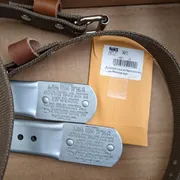
RE: I started noticing ghosting and ringing on my prints
Bolts can loosen overtime (duh). Your printer could easily have a different resonance if the gantry wasn't as rigid anymore.
RE: I started noticing ghosting and ringing on my prints
Sure..Belts loosen but then that's why belt tuning is a weekly checkup task for me. As for loose screws? I check that as well. Anyway, I'm getting ready to tear everything down to remove, clean and re-grease after 6 months.